We were standing outside the hole in the wall tea shop on the faded astroturf behind the gas station. Nearby, trucks loaded down heavy were rumbling past on the highway headed off into the desert, joining the flow of overland traffic coming from the port of Duqm now that the Houthis had taken more ground in Yemen and had firm fire control over the Bab al-Mandab to the south while the Iranians retained fire control over the Strait of Hormuz to the north. The Omanis were making out like bandits, and good for them, I loved it here. Not only were energy companies allocating capital to Oman as the safer regional play thanks to the Omani’s masterful diplomatic efforts, but they were making money as trade increasingly shifted to going overland through the empty quarter to avoid maritime chokepoints. Standing there on the faded astroturf with motor oil stains where people had pulled up too far to wait for tea, the hot air enveloped me despite it being late September and still early morning. I felt like I was seeing the shift in deglobalization in front of me, and it wasn’t bad for everyone. Some, like Oman, were profiting.
With vague thoughts of loaded down Mercedes semis being driven off into the desert being the new Portuguese caravel as this shift continues, Haroon walked up to me and asked if I wanted some Salalah bread. Tearing off a square of the hot, thin bread drizzled in honey, I said thank you as we stood there watching the trucks go past and waiting for our karak.
Haroon spoke four languages, and had been speaking Hindi to the barefoot Indians inside the tea shop making his breakfast a moment ago. I asked him once why he learned to speak Hindi and he just said matter-of-factly Mumbai was only an hour flight, and when he took his mother to the hospital, it helped him get around. Such a different world view, to think about Mumbai being that close, or how far back the regional trade ties went in this area of the world.
Grabbing our cups of steaming karak off the tray when they were brought out, we walked back to the land cruiser and continued on our journey. Karak means strong in Urdu, which as I understand it is several languages combined into what amounts to camp talk, or soldier talk, where various tribes under previous empires, wouldn’t understand one another, and so they combined a few different languages to make Urdu, so guys could at least talk to each other. Hundreds, if not thousands of years later, here are Haroon and I drinking strong chai tea in Arabia and calling it karak.
This hole in the wall place behind a gas station at a truck stop about half an hour outside Muscat is one of Haroon’s favorites. Riding around with him, I’m convinced he’s mapped his country by tea shops that serve good karak. I had made the mistake of trying to walk into the tea shop the first time we stopped here. No one told me the faded astroturf was the outdoor ordering lounge so had been greeted with flies buzzing around attracted to the sugar, fighting the oscillating fan high up in the corner of the humid small space, with several barefoot, sweating dudes making tea in giant metal kettles. I tried not to think about that first sight as I sipped my karak now and headed out of town. It may not be sanitary, but those guys back there could make a good cup of strong chai tea.
We drove in silence for a bit, I was admiring the jagged rocky outcrops, with small villages hiding at their base thinking it was a smart defensible position, wondering if they were in the shade in the afternoon sun, and the rocks provided natural cooler air, hiding from the relentlessness of the desert sun in summer. The rocks themselves, too small to be mountains, looked like a giant had stacked then in jagged rows all over the desert plain. Each of them looked like a dragon that had laid down to sleep, and the jagged rocks were just the scales running along it’s back, waiting to wake from its slumber.
Looking up at the sky through the windshield, it was a rare overcast day. It was an unspoken and widely understood rule on overcast days, guys would leave work to take the family to the beach, perhaps do a barbecue. You knew you were adapting to life in Oman when you told yourself silently, no one is going to be in the office today, it’s overcast, they’re all playing soccer on the beach with the boys or taking the family for a barbecue, I should leave too, would rather be drinking coffee and reading on the patio.
I grinned thinking about it and told Haroon it was a beach day pointing up at the clouds. He laughed and shook my arm, saying I was becoming Omani. Haroon liked to text me the weather report at night. They always ended the same, Allah knows best. Was probably one of the things I liked best about being around Haroon, no matter what happened, it was for the best. Overcast day? Was a blessing to have a day with family. Boiling hot out on the range? Was a blessing to be made a little tougher today. Didn’t get what you wanted? There was something better in store for you, and this was a lesson to become wiser.
I had told him once that he was pronoid, that he knew no matter what happened it was for good, that this was a very rare, and valuable trait since our beliefs shape our reality. After I explained that pronoid was the opposite of paranoid, he didn’t understand why there was a term for it or why it was rare when Allah clearly says all things are for good. Lol I’m going to miss working with Haroon.
Thinking about how simplicity is the ultimate sophistication, I was brought back to the present by Haroon asking me if I knew that all Arabs came from Yemen. I laughed. I loved getting the verbal history of Arabia on these rides with Haroon. Turning slightly in his seat, he said no really, in the old, old, old, days there was a valley, where all the people lived and it was so beautiful, like a garden. This was in Yemen, then a big storm came, and the sea rushed in, flooding the valley and the people had to scatter in all different directions. Some went to Africa, some went further into Arabia, and some went north to Oman.
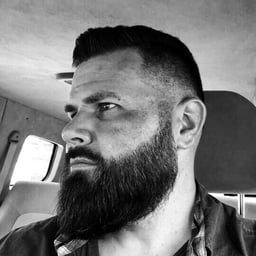
When Haroon tells stories, it is complete with sound effects, so you have to imagine a bald, jacked 50 year old Arab dude, dark from years out in the sun, with a neatly trimmed beard, and a zest for life, waving his arms in the passenger seat of the land cruiser next to me while we do 140 kph through the desert like he’s telling a story to children. Complete with hand waving for thunder crashing, whistling for wind noises, and people crying as they started their pilgrimage out of Yemen looking for a new home.
So the people had to scatter, and some walked along the coast, and they came north to Oman, and this is where us Omanis come from. Similarly the other Arabs, they all trace their roots to Yemen.
The story sounded like a combination of Adam and Eve being cast out of the Garden of Eden and the fall of Atlantis. Half way around the world, riding around with Haroon, and the stories are so familiar to the origin stories we tell ourselves in the West, that has to mean something.

Continue Reading
Subscribe to The Letter for $50/year to unlock full access and the full archive.
Subscribe to The LetterWhat you receive:
- One new letter each month, plus full archive access.
- A clear record of what I own, what I change, and why.
- Practical lessons from real decisions, including mistakes.
- Long-term perspective on markets, risks, and the world.
- A steady cadence that favors reflection over reaction.